The Digital Shift
The digitization of media hasn't reduced the need for libraries; it has simply changed their spatial geometry. As physical collections are consolidated, square footage is reallocated toward interactive digital learning.
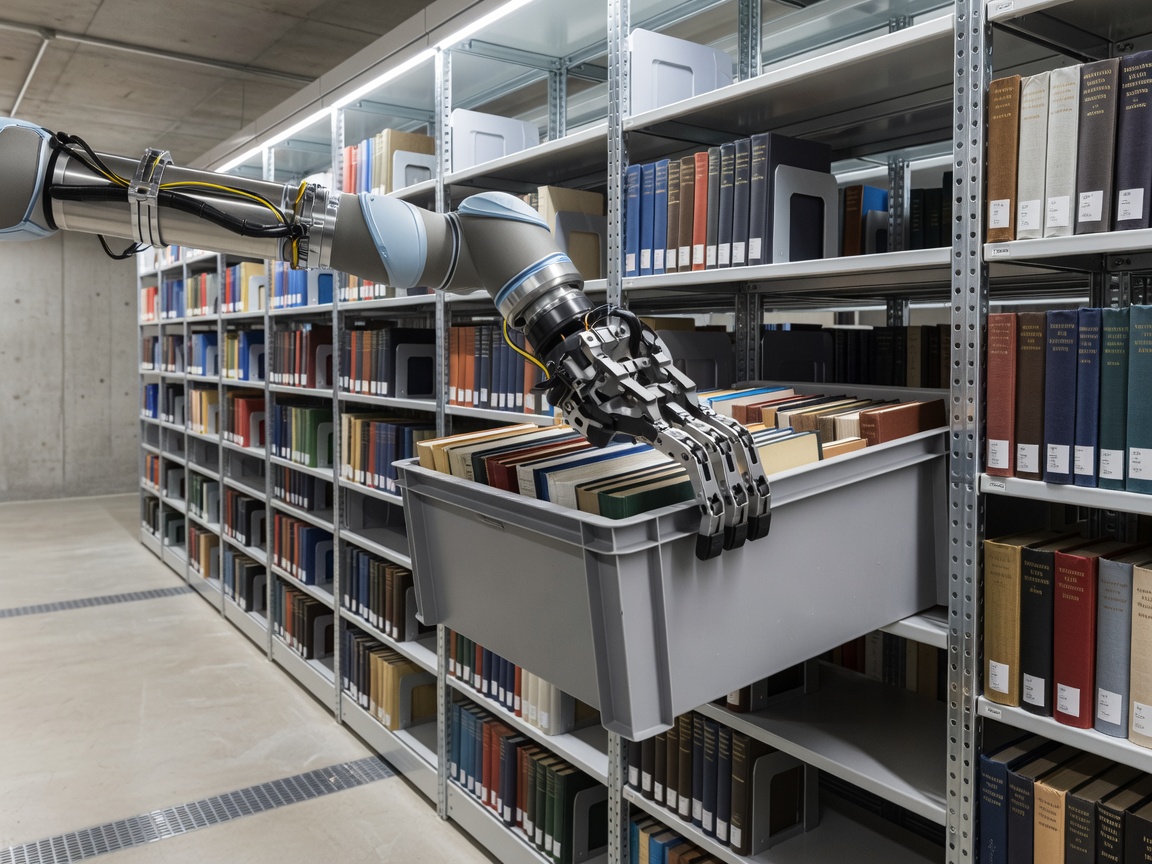
Automated Storage and Retrieval Systems (ASRS)
To free up space for human interaction, many flagship libraries have installed high-density ASRS in their subterranean levels. These robotic cranes fetch book bins in minutes. Architecturally, this removes the need for sprawling floor space dedicated to traditional shelving, allowing the upper floors to be open, bright, and strictly human-centric.
Integrating Virtual Realities
VR and AR labs require distinct architectural considerations: non-reflective surfaces, precisely mapped infrared tracking zones, and specialized HVAC to manage the heat output of localized high-end rendering servers.
The Data Infrastructure
A modern library is practically a data center. Architects must plan for massive sub-floor cable trays, raised access floors, and robust Wi-Fi mesh layouts across vast open atriums without compromising the aesthetic integrity of the reading rooms.